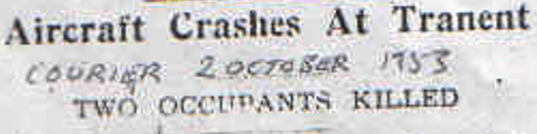
Covert Field, Buxley Farm, New Winton, Tranent
26th September 1953
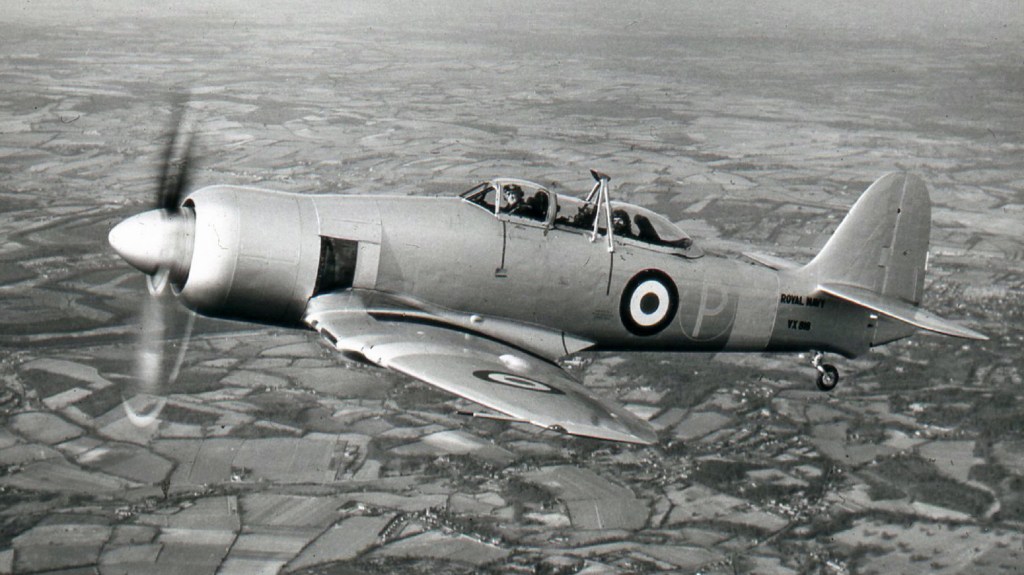
VX818 Prototype T20 Sea Fury (BAE Systems)
1Sea Fury VX283 took off from Turnhouse, now Edinburgh Airport, on the afternoon of the 26th September 1953 at around 3 pm. This flight had Harold Douglas Shaw (Dougie) as Pilot and Observer John McCaig who were to carry out a routine trials flight. Both were employed by Ferranti to carry out flight trials on various gun sights and radar equipment.
On the day of the accident Dougie and John were flying a project sortie which was for experimental Gyro Gun Sight trials. There has been mention that the range on this trip was covered in low cloud and this resulted in the flight and trial being cancelled for that day.
Approximately 32 minutes after take off VX283 was seen to perform a series of low level barrel rolls in the vicinity of Winton House and New Winton. Shortly after this VX283 would hit the ground and explode into a stubble field called Covert Field on Buxley Farm. Both men were killed instantly.

Area where VX283 came to rest. (Google Earth Image)
Information on Sea Fury VX283
2Sea Fury VX283 was a T20 aircraft built as part of an order of 27 aircraft at Kingston and assembled at Langley. This aircraft used the Bristol Centaurus engine as its powerplant with around 2400 HP.
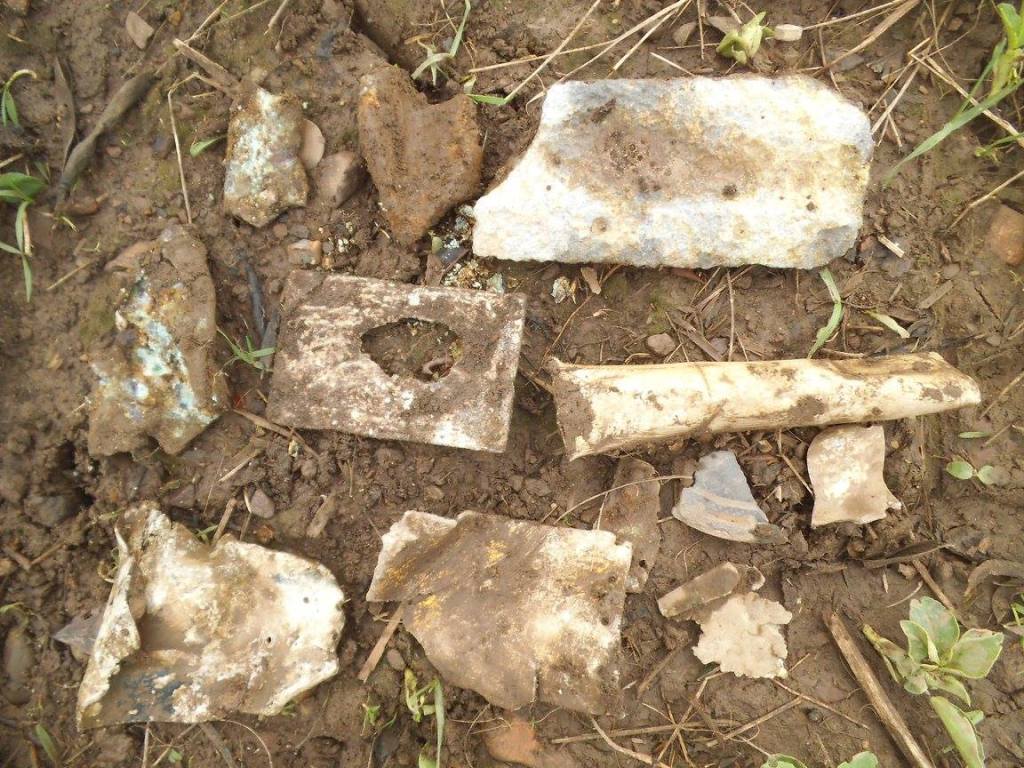
Wreckage from VX283 still found on the surface at the crash site. (ACIA)
She was made ready for collection in July 1949 and transferred to the Navy in August 1949 and permanently into Navy charge as of January 1950. VX283 underwent trials for cockpit installation and water sea trials. She was loaned for an Air League Cup race at Sherburn-in-Elmet and attained 377 MPH as an average speed. Flown by F. Murphy, she was placed third overall in July 1950.
I am looking into the facts of the Air Race because another photo of an Air Race at Hatfield in 1951 has information showing that VX283 attended this race too with the number 1 displayed. However the image is blurred and I am unable to make out the serial number properly.
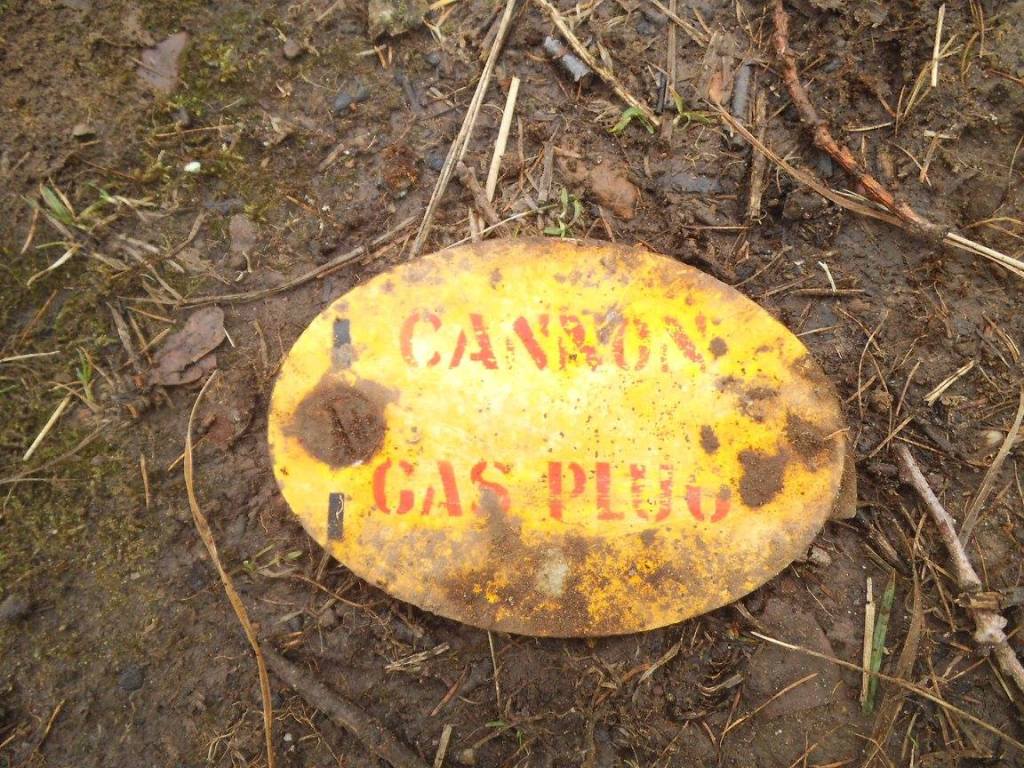
A surprising find. This plate has serial VX283 stencilled on the rear. (ACIA)
She was put on static display at the Farnborough Air Show in September 1951 and then sent to Ferranti at Turnhouse in May 1953. It was with Ferranti that she was used for flight trials on Gyro Gun Sights and Bombing Trials. Soon after the crash in October VX283 was struck of charge and the remains were sent to Donibristle, also known as HMS Merlin, this would have been the closest Naval Maintenance Yard to Turnhouse. VX283 was presumably scrapped sometime after this.
The Ferranti Flying Unit
1Ferranti as a company began in the 1920 producing valves for the domestic radio market. Ferranti Edinburgh was quickly formed in 1942 to make the RAE designed Gyro Gunsight (GGS) and carried out this task until the end of World War II. Following the end of the War the company saw a decline in requirement for their wares and production slowed. If Ferranti were to survive in Edinburgh they would need to find new ways to get business. The rise in passenger flight would mean instruments and other navigation aids would be required. Ferranti Edinburgh found its way into the navigation aids market producing Distance Measuring Equipment (DME). All these aids would of course need flight testing and to enable this a Dakota aircraft was put on allocation to the Edinburgh based group. Scottish Aviation would install the equipment and service the aircraft for Ferranti while Scottish Airlines would operate the aircraft. It wasn’t until 1951 on the allocation of Sea Fury VX301 did the company see its first official pilot. Some time before this a trials and installation team had been formed which required different aircraft to be fitted with equipment and then to test flown. Contracted out fitting and test flying just wouldn’t be viable.
The Ferranti Flying Unit was formed in Edinburgh August 1952 which was when the paperwork was signed to officially form the unit, although flying and testing had been operating to a degree from a year or so before this.
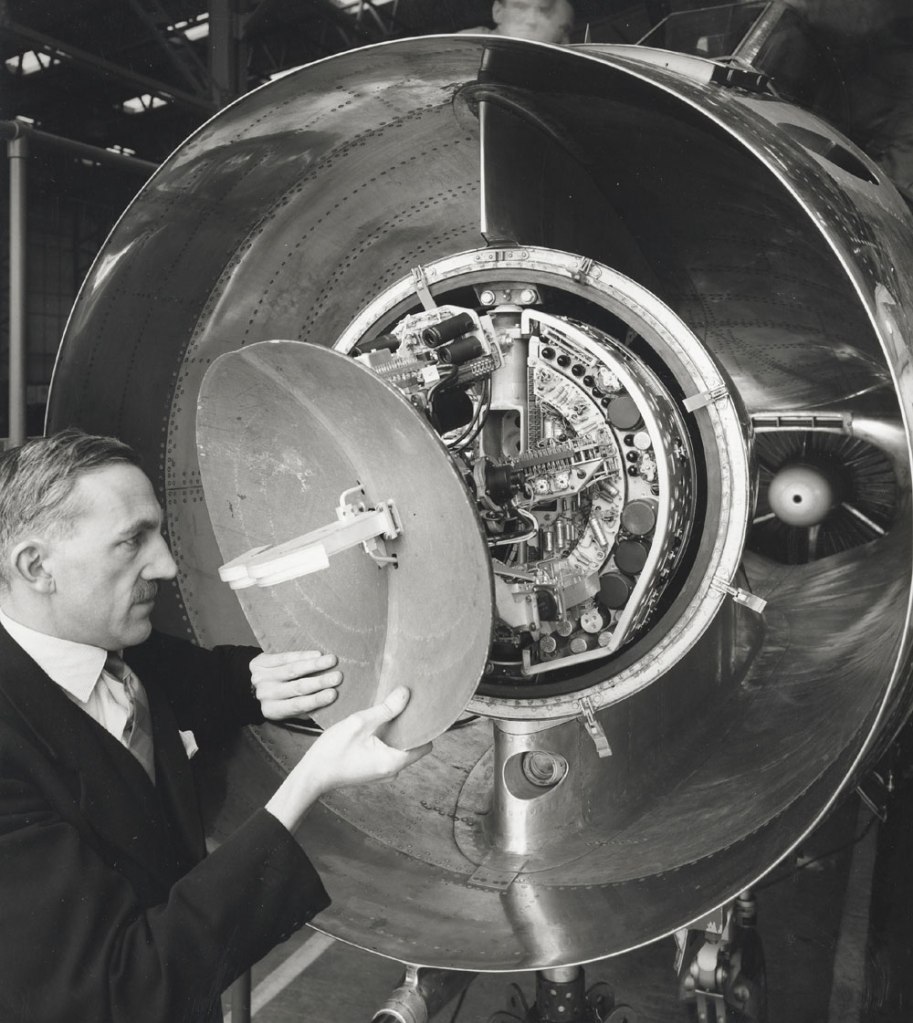
DME Distance Measuring Equipment. One of several projects developed at Ferranti and used in trials with The Ferranti Flying Unit. (uk.leonardo.com)
The flying unit during its operational period flew around 25 different aircraft and several different types. The type of work carried out would cover gunsights, measuring equipment, bomb aiming equipment and radar equipment. They flew transport aircraft such as the Dakota, Valetta and Varsity; fighter aircraft such as the Sea Fury (although in Trainer form) and the Meteor; bomber aircraft were covered also in the form of the Canberra and Buccaneer. Of all the aircraft they flew the unit only ever owned one aircraft. This is the Gloster Meteor NF14 WM261 (Civilian Register G-ARCX) which is now on display at The National Museum of Scotland Museum of Flight at East Fortune.
All through the different projects several pilots, aircrew, aircraft, accidents, trials and tribulations the unit would finally come to an end in 1973 with the departure of the last unit test pilot. The company would still maintain flight test trials but largely on other companies’ trials with Ferranti trials engineers onboard. It was 1975 before the British Airports Authority took over the Ferranti Flying Units hangar at Turnhouse. Ferranti continued in Edinburgh for many years after this but the flying unit was no longer.
Accident Summary
The cause of the accident is not clear, but what can be seen from the evidence we have is that a certain amount of inexperience on the Sea Fury coupled with manoeuvres so close to the ground could have been a contributing factor in the situation. It could also have been a mechanical failure as the engine was seen and heard to cough while performing the rolls just prior to the crash. One thing is for certain, two men lost their lives that day and families changed forever.
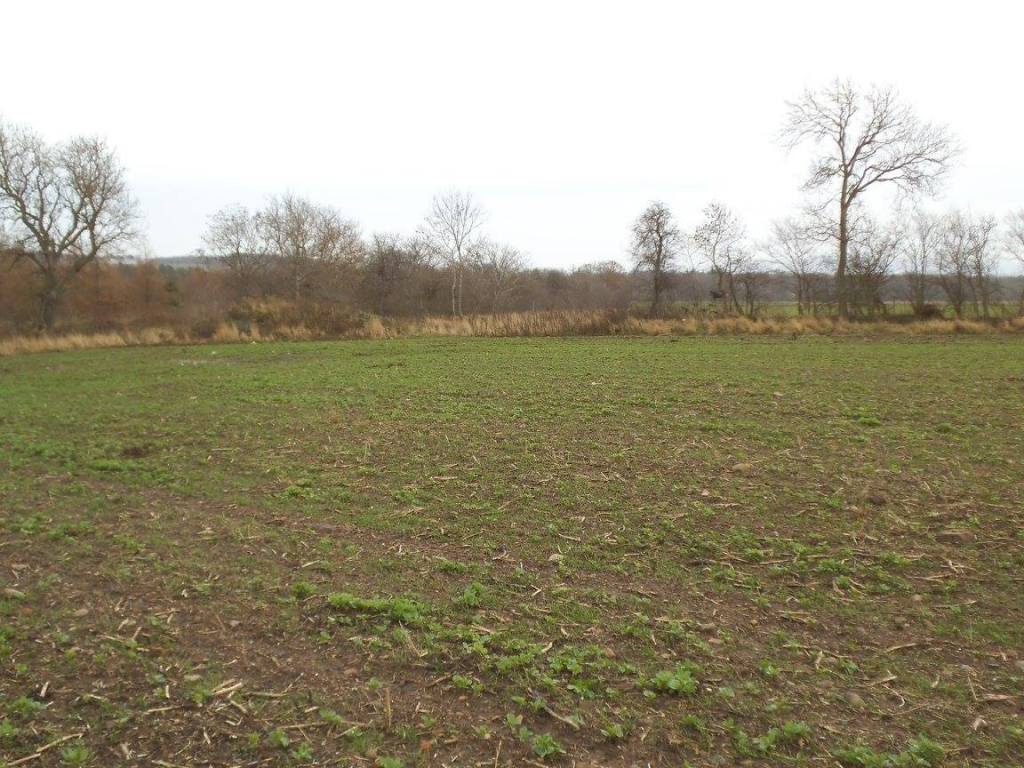
Impact area of VX283 (ACIA)
1Quarter of a Century of Blood, Toil, Sweat and Tears. Some Personal Recollections of the Ferranti Flying Unit’s Aircrew and its Aircraft. Prepared by J Pascoe-Watson (A History of Ferranti Flying Unit)
2Fleet Air Arm Fixed Wing Aircraft Since 1946 Ray Sturtivant, Mick Burrow, Lee Howard Via National Aerospace Library
 Scottish Aircraft Wrecks
Leave a comment